Your Workout

Health
The vagus nerve and movement.
How bellicon can support the vagus nerve.
Activating the vagus nerve can promote relaxation, recovery, and inner balance. People who often feel stressed or exhausted are particularly in need of gentle ways to find more peace and renewed energy. This is precisely where the vagus nerve plays a central role. Among other things, it influences stress regulation, recovery after exertion, and the balance between tension and relaxation. Gentle exercise can positively influence the vagus nerve and help the body more easily enter a state of calm and regeneration.
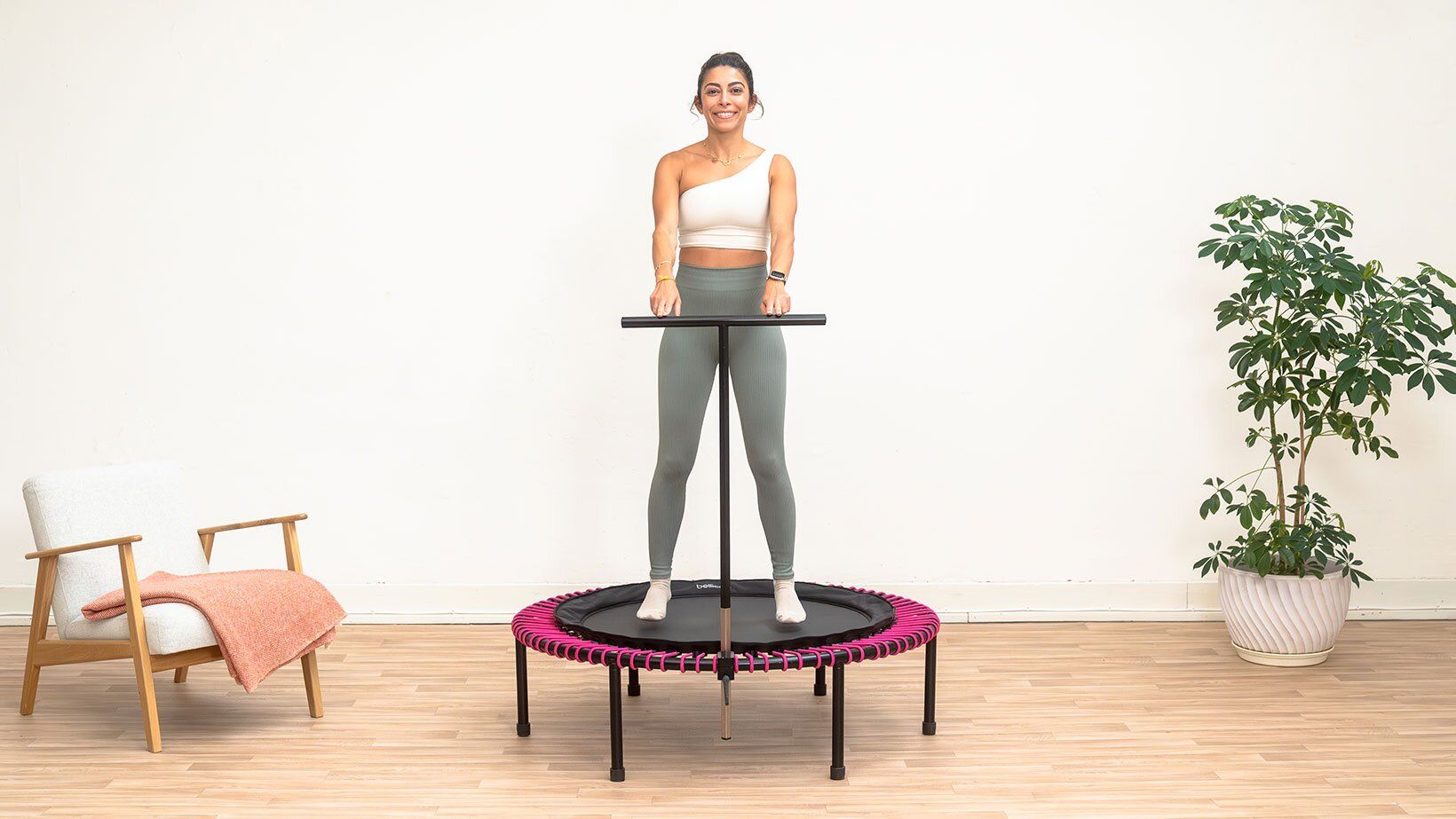
bellicon training combines rhythmic bouncing with a flowing movement pattern that gently stimulates the nervous system. In this way, training on the bellicon supports regeneration, well-being, and inner balance.
In this article, you’ll learn what the vagus nerve is, why it’s so important for stress regulation and regeneration and how bellicon training can help gently activate the vagus nerve.
What is the vagus nerve?
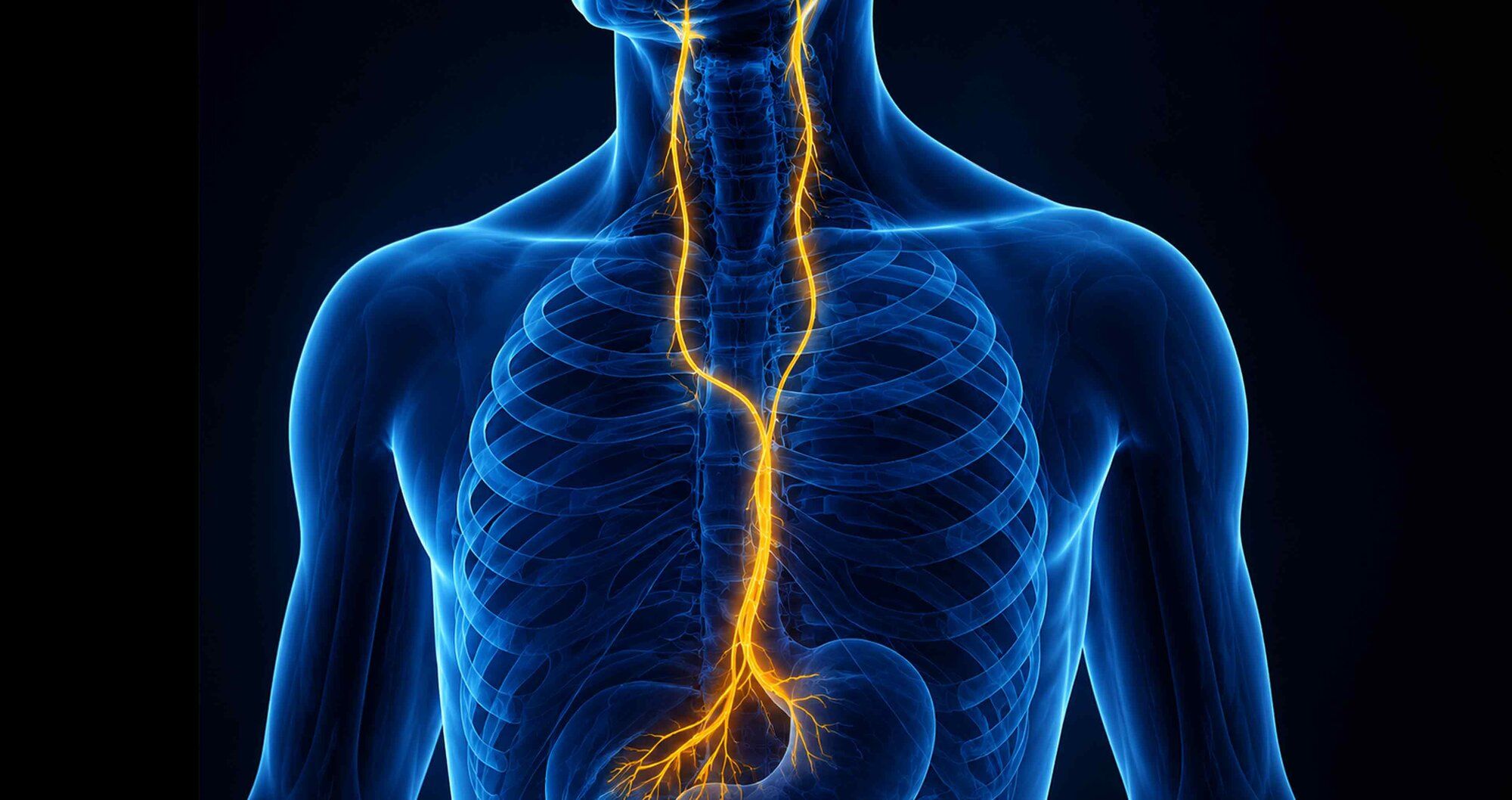
The vagus nerve is one of the central nerves in the human body and controls numerous vital processes. As the tenth cranial nerve, it runs from the brain down through the neck into the chest and abdomen and is connected to organs such as the heart, lungs, and digestive system. This makes it a crucial link between the brain and the body and is considered a kind of “information highway”.
Its role is to help regulate many unconscious processes. These include, for example, breathing, heart rate, digestion, swallowing, and certain vocal functions. The vagus nerve is particularly important for the parasympathetic nervous system—the part of the nervous system responsible for relaxation and recovery.
When the vagus nerve is well-regulated, the body can wind down more easily after exertion. This is precisely why it is receiving so much attention on social media today, especially when it comes to inner balance and healthy stress management.
The vagus nerve in science.
The vagus nerve has long been known in medicine. As far back as ancient times, researchers studied how this nerve runs through the body and what role it plays in vital bodily functions. While early research focused primarily on anatomy and the nerve’s course, modern science now takes a much more comprehensive view of the vagus nerve.
The significance of the vagus nerve extends far beyond its role as a mere connection between the brain and the organs. It plays a vital role in the autonomic nervous system and influences, among other things, how the body reacts to stress and subsequently recovers more easily. This makes it particularly relevant when it comes to stress regulation, regeneration, and inner balance.
Recent research also shows that the vagus nerve is connected to the immune system. Physician Kevin Tracey was able to demonstrate that it is involved in the regulation of inflammatory processes. Current studies, including those from the Feinstein Institute, underscore the close connection between the vagus nerve, the nervous system, the immune system, and regeneration.
How exercise can support the vagus nerve.
Exercise not only activates muscles, circulation, and breathing, but also affects the nervous system. In this context, the vagus nerve plays an important role, as it is a central component of the parasympathetic nervous system.
As soon as movement begins, activity in the body initially increases. The heart rate rises, breathing becomes more intense, and blood flow to the muscles increases. However, it is not only the exertion itself that is crucial, but also the body’s ability to return to a state of recovery afterward.
This is precisely where gentle, steady, and rhythmic exercises can be particularly valuable. They can promote vagal regulation—that is, the nervous system’s ability to return to a state of calm after activity. Especially when exercise is combined with calm, mindful breathing, a natural rhythm emerges that can strengthen inner balance.
That's why not every form of exercise needs to be intense to benefit the body. Gentle exercises, can help reduce stress, promote recovery, and naturally activate the vagus nerve.
bellicon, Flow Motion, and the Vagus Nerve.
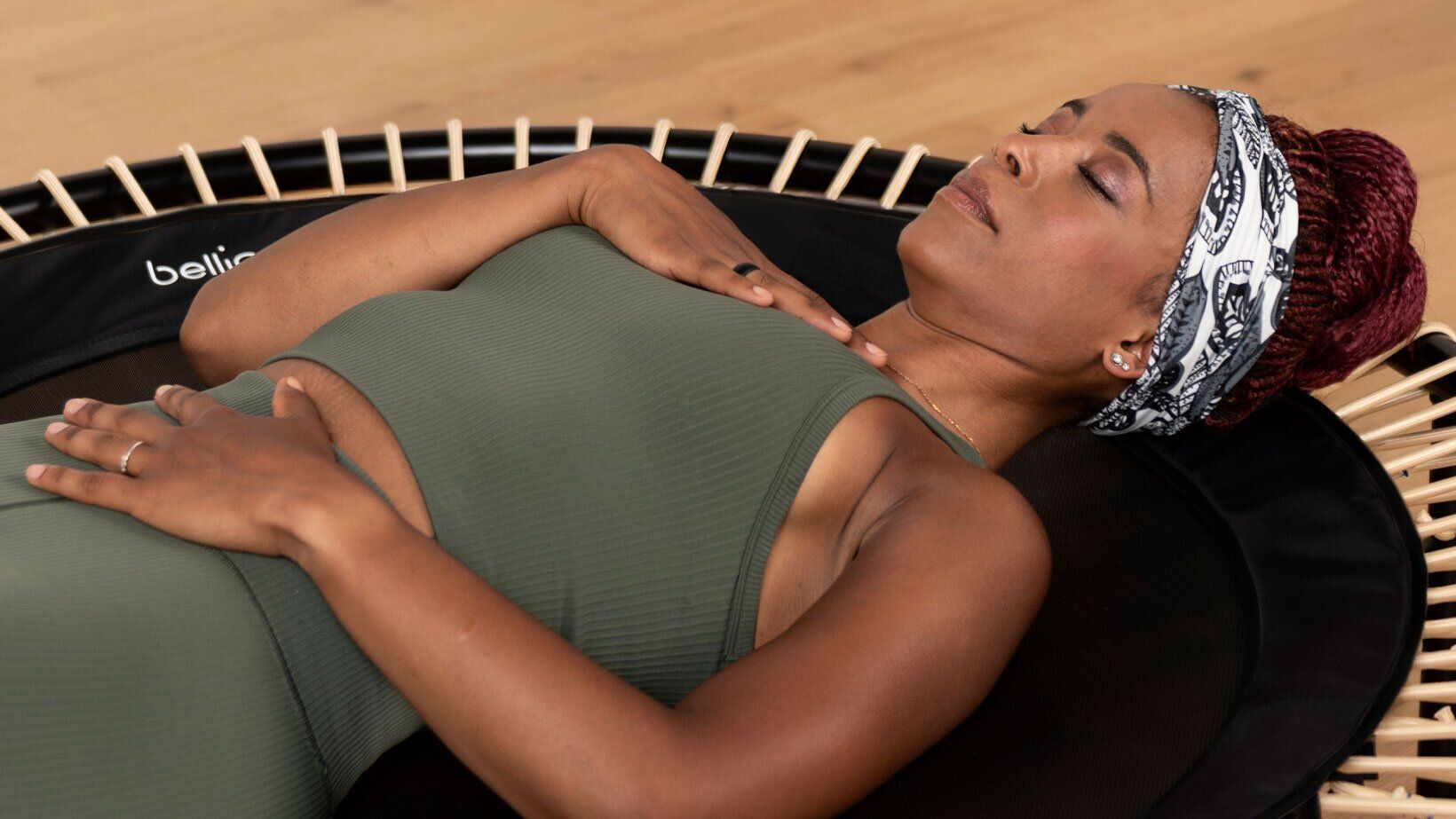
Training on the bellicon clearly shows how closely exercise and the nervous system are interconnected. The gentle bouncing, soft pressure and relief phases, and flowing rhythmic movements combine activation and recovery perfectly. As a result, training on the bellicon can not only get the body moving but also promote regeneration and inner balance.
From a preventive medicine perspective, this connection is also of interest. Prof. Dr. Gerd Schnack described trampoline training not as a direct medical vagus nerve stimulation, but as a gentle, rhythmic form of movement that can engage the nervous system. The focus is not on hard jumps, but on steady movement, conscious breathing, and recurring gentle stimuli.

This is where the uniqueness of bellicon Flow Motion lies. By alternating between pressure and relaxation, the body is gently activated without harsh load peaks. This can help reduce stress, improve body awareness, and promote vagal regulation. While the vagus nerve cannot be directly controlled with the bellicon, it can be gently stimulated.
The Vagus nerve as the key to all-round health.
The vagus nerve is a central connection between the brain and body. It influences how well you can return to calm, regeneration and inner balance after stress.
This is where the special strength of bellicon lies. Through the bouncing motion and the gentle alternation between pressure and relaxation, a flowing rhythmic movement is created – the bellicon Flow Motion feeling. This way, the training can not only activate the body but also calm the nervous system and create more balance in everyday life.
