
As you get older, you lose muscle strength. Between the ages of 30 and 80, you lose as much as 30 to 40% of your muscle mass. In older age, this results in you feeling less steady on your feet. It is estimated that only about one in six people aged 65 and older gets enough physical activity. Yet regular training is so important, especially for older adults.
Several short, moderately intense bouts of movement throughout the day make a big difference to health. They bring more oxygen to the body’s cells, waste products are removed more efficiently, and nutrients are absorbed better.
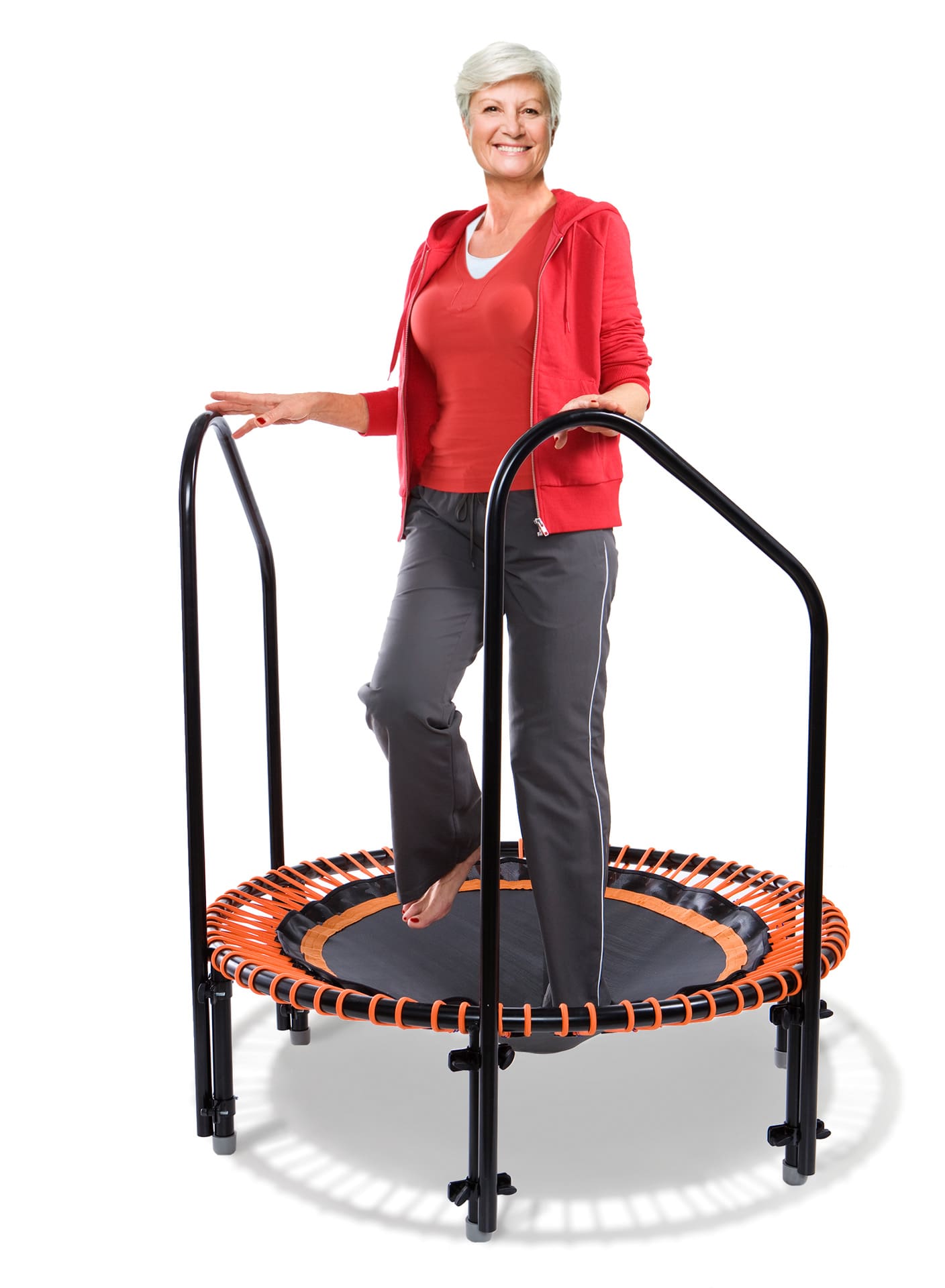
In a fall-prevention study programme with eleven women aged 62 to 85, nine women completed the full programme and two women took part for six weeks. All of the women in this group were able to stand on the bellicon® independently, some using the T-support. Participants could use a small step to get onto the bellicon®. A few were helped at the start, but after four training sessions they could do this on their own.
The programme included three measurement points: a baseline at the start, after six weeks of training, and after twelve weeks of training. At each measurement point, four tests were carried out and participants had to fill in a questionnaire. These tests were conducted under the guidance of a Dutch “oefentherapeut Cesar” (a recognised movement-therapy profession in the Netherlands) and a trainer. The training programme lasted 15 minutes per session, twice a week, and consisted of exercises to improve balance, coordination, muscle strength, and endurance.
The bellicon® can be used preventively to reduce a number of age-related complaints:
- strengthening bones to counteract osteoporosis through exercise against gravity;
- challenging balance, thereby training coordination and reflexes;
- getting rid of waste products faster, as the lymphatic drainage process is stimulated, resulting in faster recovery (up to 2-3 times faster than walking);
- strengthening the bladder and pelvic floor muscles. When bouncing on the bellicon®, the pelvic muscles engage first, followed only afterwards by the abdominal muscles;
- effectively burning calories to keep weight under control;
- relaxing the muscles, particularly the back and neck muscles, to prevent back and neck complaints;
- stimulating blood circulation and lowering blood pressure through gentle cardio training;
- moving with less or no pain in cases of osteoarthritis, since there is no impact load on the joints;
- a positive effect on depression through the production of neuropeptides, including endorphins, a substance that produces a good, happy feeling;
- fear of falling. Because you develop better balance and your muscle strength increases, you have more control over movement and therefore less, or no more, fear of falling.
After 6 weeks, half of the participants reported that their endurance had improved, and balance had improved in 7 out of 12 participants. Improved muscle strength, particularly in the legs for some participants, better sleep, increased energy, and improved digestion were also mentioned as positive effects. One participant was free of her back complaints after 6 weeks, and another participant reported that her fear of falling had decreased and that she was less depressed than at the start of training. After 12 weeks, participants experienced almost the same improvements.
All participants not only scored a clear improvement in stability, but also experienced it themselves. At the end of the fall-prevention programme, all participants reported feeling clearly less afraid of falling and feeling more secure both on the street and at home. This is further supported by the results of the FES test. The squat test also showed a clear increase in muscular endurance strength in all participants.