
Strengthening the pelvic floor muscles is a good way to prevent or resolve complaints. If you want to do exercises to strengthen your pelvic floor, it’s wise to focus on stabilisation and coordination exercises. It’s important to move from a relaxed starting position, keeping your attention on the pelvic floor and on tensing and relaxing the muscles.
The website GezondNu has three good exercises to strengthen your pelvic floor muscles without the bellicon®:
Exercise 1: Pelvic tilt
- Stand upright with your feet firmly on the ground and your knees slightly bent. Push your breastbone forward and directly above your upper body. Keep your head in line with your body and let your shoulders hang relaxed.
- Now place the back of one hand on your lower back and the inside of your other hand on your abdomen below your navel, with your little finger pointing toward your pubic bone.
- Press your little finger against your pubic bone.
- Exhale and tilt your pelvis forward. As you do so, tense your pelvic floor by drawing your pubic bone and tailbone together. Hold this position for as long as you exhale.
- On the inhale, your pelvis tilts backward far enough to create a slight arch in your lower back. Move your pelvis back and forth ten times.
Exercise 2: Roll
- Lie on your side on a comfortable surface. Support your head with a small, firm pillow.
- Pull your bent legs a little closer to your body and place your lower arm, with a bent elbow, under your head. Your other arm rests relaxed on your hip.
- Tense your pelvic floor muscles.
- Lift your upper leg five to ten centimetres.
- Lower your leg again, but don’t rest it fully on the ground.
- Repeat the exercise 20 times and switch sides. Switch legs after the exercise too.
Exercise 3: Pull cable
- Lie flat on your back. Your legs are stretched straight up, feet crossed. Spread your arms out at an angle with your palms facing the ceiling.
- Your shoulders lie flat on the ground.
- Tense your abdominal muscles and lift your legs and buttocks straight up a little higher. Feel how the muscles lift upward and inward. Don’t perform this exercise too quickly. Your legs stay stretched at all times. The movement is very small.
- Hold the tension briefly, then return to the starting position.
- Do two sets of five repetitions.
Using the bellicon® trampoline is an excellent way to train your pelvic floor muscles starting from a relaxed position, without overloading the pelvic floor or even the joints. Moving on the bellicon® trains all 656 muscles, so automatically the pelvic floor muscles too.
Even if you suffer from incontinence (or if your pelvic floor muscles are very unstable), it’s enough to gently bounce up and down without needing to lift your feet off the mat. The bladder contents then don’t press too hard on the bladder sphincter, so no urine leaks. The sphincter tenses as you sink in and relaxes as you bounce back up.
Many users notice changes after using the bellicon® for pelvic floor problems.
Anneke: “Our bellicon is mainly used in our practice.” “We use the bellicon for a growing number of conditions. Besides the regular training indications, we also have people with pelvic floor, vascular, and lymphatic issues training here.”
If you want to use the bellicon specifically for pelvic floor issues, we recommend at least the 112 cm model. On this model you can perform standing and lying exercises with enough space. The 125 cm model offers even more comfort. You can choose screw-in or folding legs depending on whether or not the bellicon needs to be stored away often. If it needs to be put away frequently, folding legs are very convenient. The most important choice is that of the bungees. Here, we recommend choosing as close as possible to your own body weight. Choose Soft bungees up to 60 kg if you weigh no more than 50 kg. Choose Medium bungees up to 90 kg if you weigh no more than 80 kg. Choose Strong bungees up to 120 kg if you weigh no more than 110 kg. Choose Extra Strong bungees up to 150 kg if you weigh no more than 140 kg. Choose Ultra Strong bungees up to 200 kg if you weigh no more than 190 kg.
Configure your own bellicon in our shop configurator. Below, we’ve already set up a bellicon that customers or therapists often choose when they want to address pelvic floor issues. Based on the information above, all you need to do is choose the bungee strength, followed by your favourite colours.
1. https://www.psyq.nl/seksuologie/vragen/wat-zijn-bekkenbodemspieren
2. https://www.groepspraktijkminerva.nl/therapieen/bekkenfysiotherapie/wat-is-de-bekkenbodem/
3. http://www.umcg.nl/NL/Zorg/Volwassenen/zob2/bekkenbodemproblemen_bij_vrouwen/Paginas/default.aspx
4. https://www.mchaaglanden.nl/stimulansz/ziekten-a-z/bekkenbodemproblemen
5. https://www.hetrughuis.nl/rugklachten/bekkenklachten
Pelvic pain? Incontinence? Unstable pelvic floor muscles? All kinds of complaints that can seriously affect your life in a negative way. And complaints that are all related to pelvic floor instability.
Want to train your pelvic floor muscles? And resolve pelvic floor instability? Then read this post!
In the video alongside, Remy Draaijer, CEO of bellicon Nederland, explains why exercising on the bellicon is suitable for safely training the pelvic floor muscles.
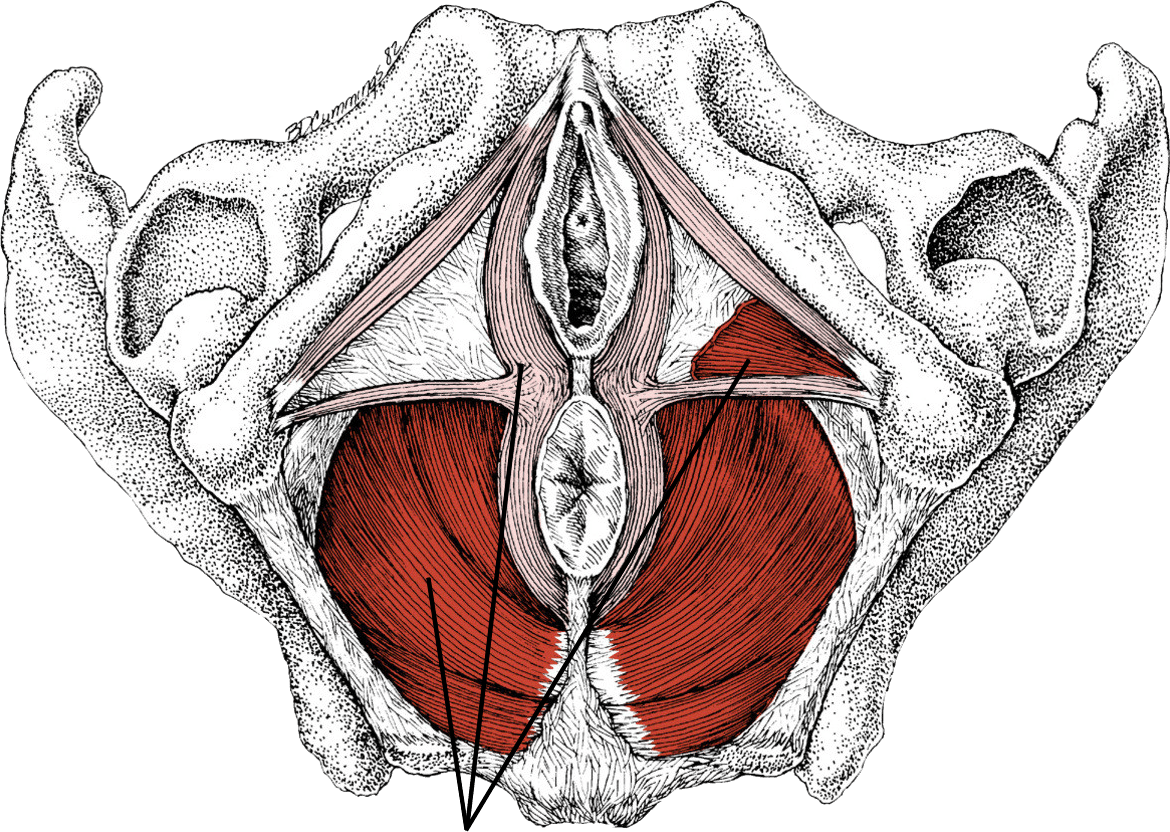
The pelvic floor consists of a group of muscles that close off the bottom of the pelvis. The pelvic floor muscles support the intestines and the bladder, and enable you to hold in urine and stool. The sphincter muscles control the opening and closing of the urethra, which carries urine from the bladder out of the body.
The muscles run from the tailbone to the pubic bone and between the sitting bones (ischium) of the buttocks. Women have three openings: the urethra, the vagina, and the anus. Men have two openings: the urethra and the anus.
There is a wide variety of complaints in the region of the pelvis, lower back, or hip. It’s therefore important to distinguish carefully between the different types of complaints in this region.
Symptoms of pelvic complaints are often pain around the pelvic structures, such as the tailbone, sitting bones, pubic bone, and/or the SI joint. Besides pain in the bones, you can also experience complaints in the surrounding muscles, such as the buttock muscles, pelvic floor muscles, and hip muscles. In both cases, there can be referred pain in the abdomen, buttock, groin, or leg. Other complaints related to pelvic floor instability include: difficulty holding in urine or stool, prolapses such as uterine prolapse, pain complaints, constipation, or sexual issues such as pain during intercourse or erection problems.
Pelvic floor problems occur mainly in women. The problems often arise from childbirth and pregnancy. During childbirth, the tissue stretches and can weaken. Nerves can be damaged in the process. Many pregnant women develop pelvic pain around week 20. After 4 to 5 months of pregnancy, the baby’s weight is already clearly noticeable, and the baby increasingly rests on the pelvic muscles. The muscles then have to work hard, which can cause pain.
Other causes of pelvic floor problems include being overweight, a congenital weak pelvic floor, chronic coughing, lifting objects that are too heavy, and hormonal changes during menopause.
Training the pelvic floor muscles also produces results in men. By tensing the muscles around the anus, a man can locate them most easily. Training these muscles results in improved erections and more control over orgasms.
What is biofeedback?
Biofeedback is short for biological feedback. This means information about body activities is displayed on a screen: in this case, about the tensing and relaxing of the pelvic floor and abdominal muscles.
With biofeedback, this muscle activity is measured using an electrode probe placed in the vagina or anus during exercises. In addition, 2 electrodes are placed on the abdominal muscles. The movements of the pelvic floor muscles can be followed on the screen. This makes the person involved and the professional (doctor/(physio)therapist) more aware of the use of these muscles during movement.
bellicon biofeedback test
Physiotherapist Maura Seleme (specialising in pelvic floor and urogynaecological dysfunctions) tested the bellicon® mini-trampoline using a biofeedback device.
Several test subjects had the same result. One exercise was performed on three different surfaces: a hard floor, a mini-trampoline with stiff springs, and the bellicon (flexible bungee suspension). The exercise involved jogging. Neither foot was lifted off the mat at the same time.
On the hard surface, the graph showed that the abdominal muscles tensed first and only afterwards the pelvic floor muscles. The same was seen when jogging on the trampoline with stiff (metal) springs. When jogging on the bellicon, the pelvic floor muscles tensed first, and only afterwards the abdominal muscles.
So if someone with incontinence, for example, exercises on the bellicon, the chance of losing urine is therefore smaller than if the same exercise is performed on a hard surface or on a trampoline with stiff springs. This is because on the bellicon the pelvic floor muscles tense before the abdominal muscles.
It’s important for someone with incontinence to build up the intensity of the exercises gently. As the pelvic floor muscles become more stabilised, the intensity of the exercises can be increased slowly. During movements/impulses such as bending, running, climbing stairs, coughing, sneezing, etc., incontinence can then be kept under better control. The choice of bungee strength on the bellicon is also important for the effect. This is chosen based on body weight, physical condition, and the purpose for which the bellicon is used.
Dr. Maura Seleme talks in the video alongside about her measurement results with the bellicon. With these measurements, she shows that moving on the soft bellicon is particularly well suited to training the pelvic floor muscles in a pleasant way.